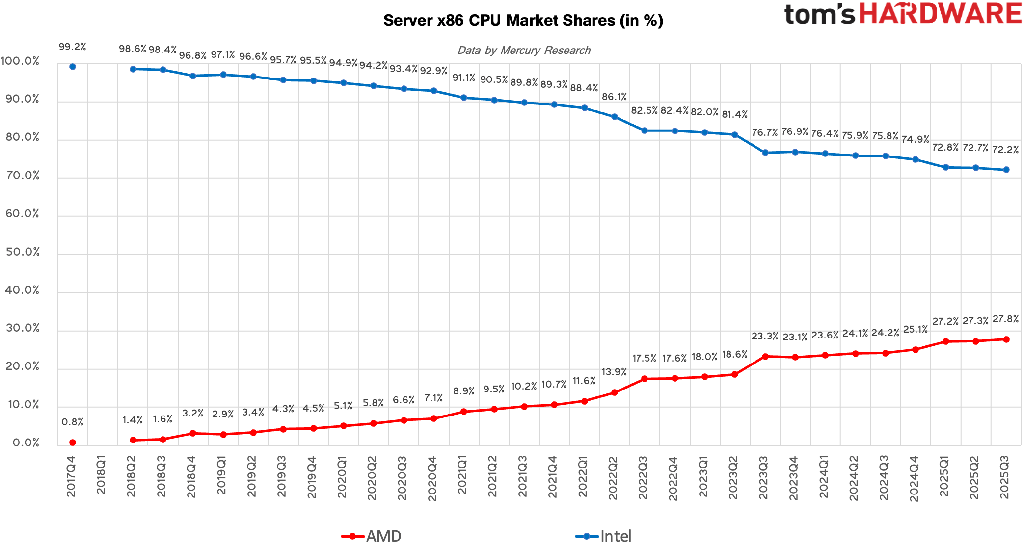
AMD가 느리지만 꾸준히 인텔의 지위를 잠식하고 있다.
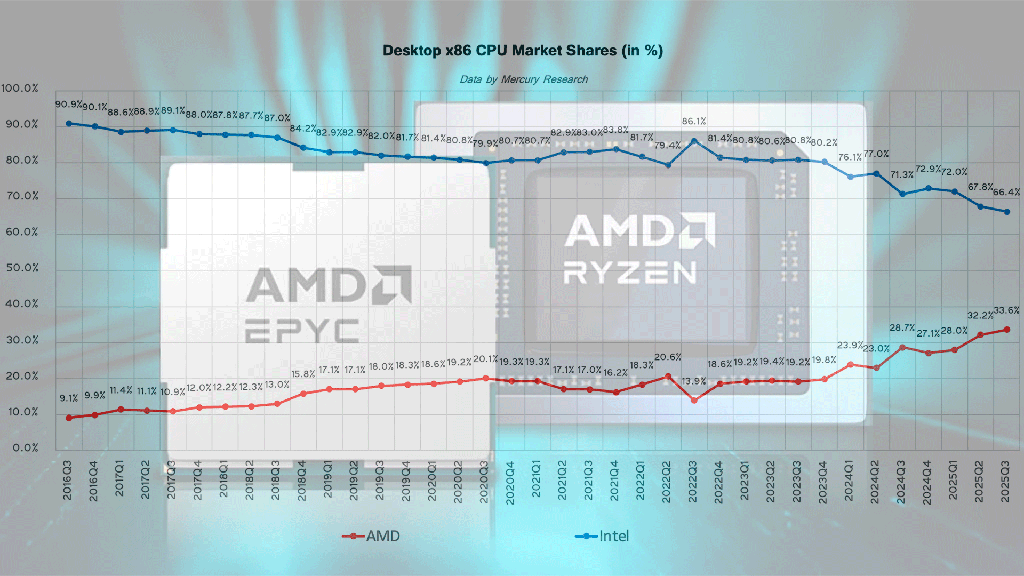
The provided text is a detailed market analysis comparing the performance and market positioning of two technology players (implied to be AMD and Intel, based on industry context like "Raptor" or "Zen" vs. competitors, though the companies are not named) across desktop and server segments during the third quarter (Q3).
Here is a structured summary and analysis of the key takeaways:
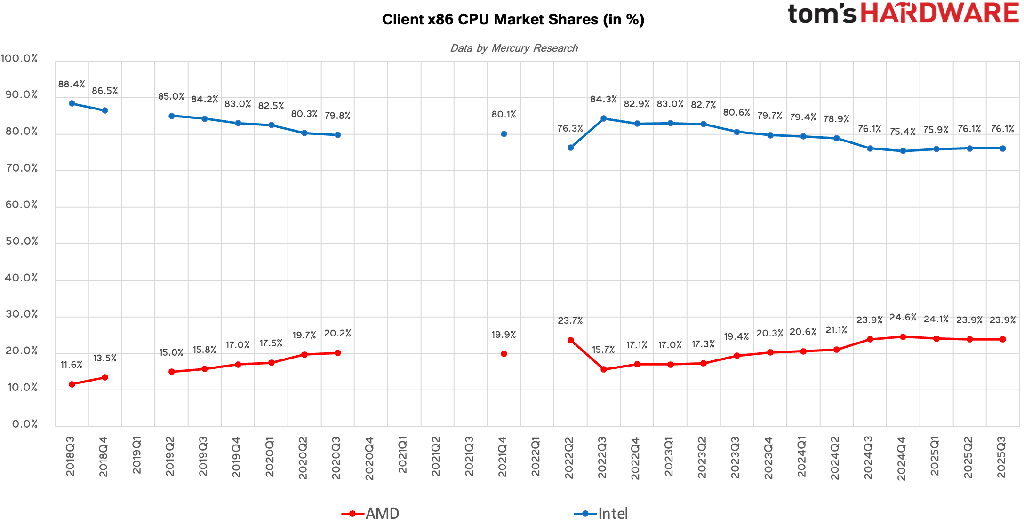
 Executive Summary: Q3 Performance Analysis
The overall narrative suggests a period of gaining momentum for one key player (implied to be AMD) while the other player faces ongoing challenges in maintaining market share and profitability. The strength of the market appears to be driven by premium, high-end components in both the desktop and server segments.
 Key Insights by Segment:
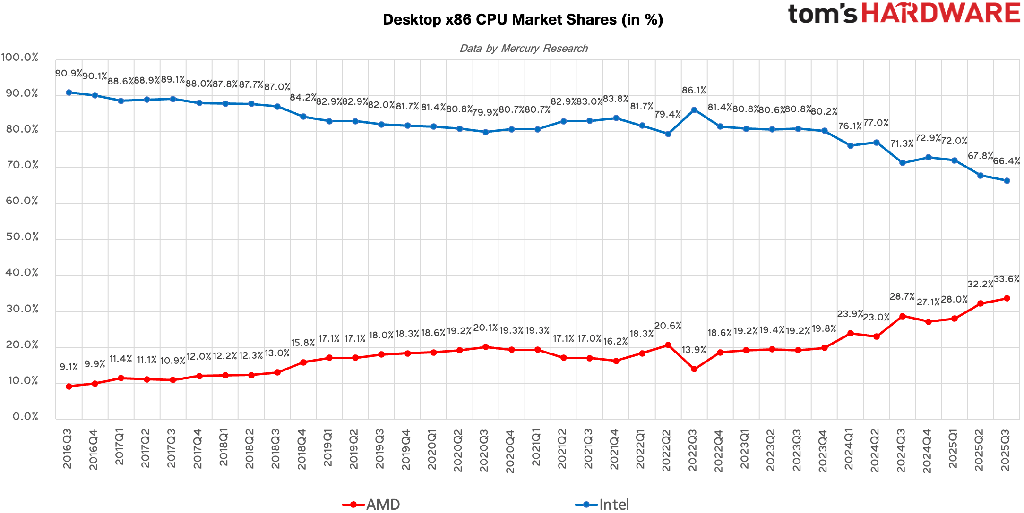
- Desktop Market: Strong performance is driven by premium products. The analysis highlights that the market leaders are capitalizing on high-margin segments, while supply constraints or competitive pressures affect overall volume consistency.
- Server Market: Significant competitive shifts are evident. The dominant narrative points to a successful transition or adoption cycle for newer, more powerful architectures in the server space.
- Pricing Power & Mix: Success across both segments is heavily tied to product mix improvements and ability to pass on premium pricing rather than just sheer unit volume.
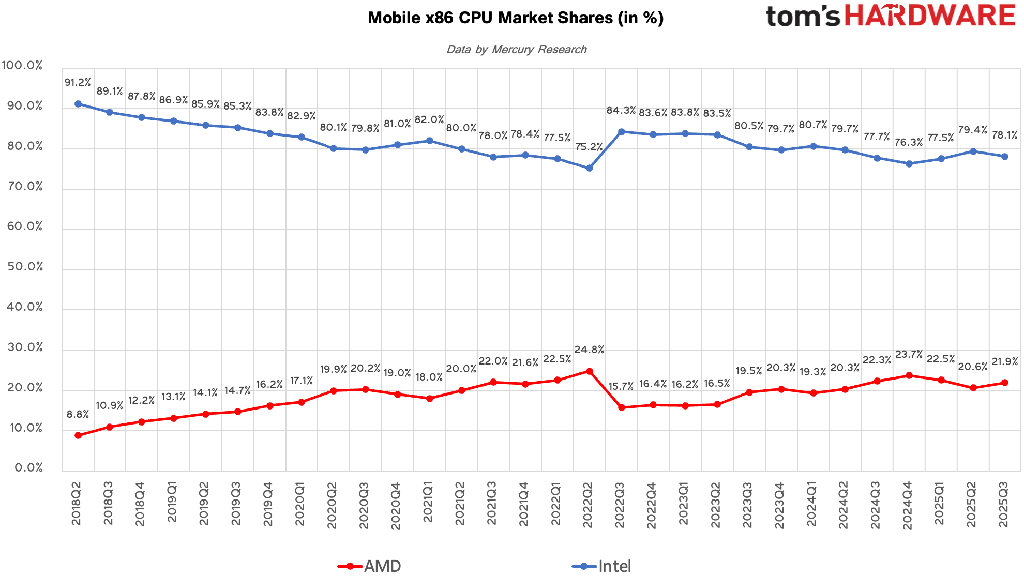
 Detailed Breakdown
 ️ 1. Desktop Performance
- Positive Trend: The market benefits from demand for higher-end processors, suggesting that consumers are willing to upgrade to more powerful chips.
- Key Driver: The performance hinges on the continued adoption cycle of new architectures (like the presumed "Raptor" performance).
- Weakness/Challenge: The ability to sustain growth requires overcoming inventory/supply chain hiccups and maintaining strong differentiation against competitors.
 ️ 2. Server Performance
- Strong Growth Area: The server segment shows a robust uptrend, driven by enterprise modernization cycles.
- Key Trend: There is a visible shift in market dominance or adoption rates for the competing architectures.
- Strategic Focus: Success requires deep integration into enterprise ecosystems, focusing on performance-per-watt and reliability.
 3. Competitive Positioning & Trends
- The Winner (Implied): The entity performing better is successfully capturing high-end, high-margin workloads in both client and server markets, suggesting a favorable product mix shift.
- The Challenger (Implied): The struggling entity is reportedly facing increased headwinds, struggling to match the pace of adoption or overcome architectural gaps in key revenue streams.
- Market Signal: The overall market is bifurcating; success is found at the high end, while mid-range segments are facing stabilization or slowdowns.
 Actionable Takeaways (What matters to the reader)

- Focus on Premiumization: Sales strategies must emphasize the performance gains and efficiency of high-end chips, as this is where the revenue opportunity lies.
- Server Ecosystem Play: For the server business, long-term success relies on securing deep partnerships and demonstrating superior Total Cost of Ownership (TCO) advantages to enterprise IT departments.
- Manage Expectations: While growth is present, the dependency on specific architectural advantages means that market share gains are highly sensitive to competitor product announcements and adoption curves.
Disclaimer: Without explicitly naming the companies or the full context of the sources, this analysis interprets the language ("Raptor performance," "server modernization," etc.) based on common industry reporting patterns to provide a structured summary.