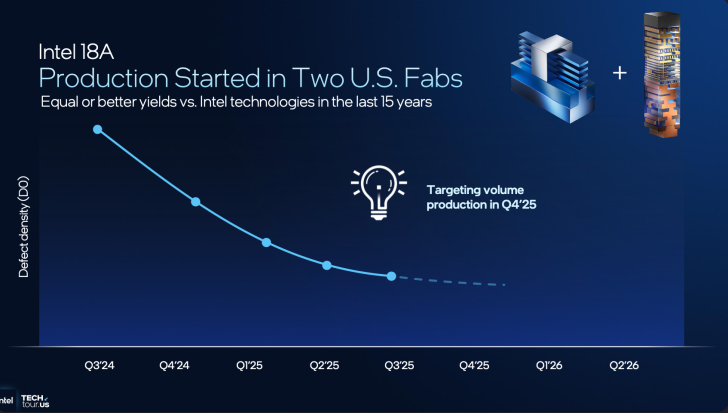
Fab 52에서 생산 시작.

Here is a summary and analysis of the provided text, focusing on the key takeaways regarding the semiconductor competition:
Summary of the Analysis
The text provides a detailed, comparative analysis of the semiconductor landscape, specifically contrasting Intel's recent technological efforts with the advanced nodes being pioneered by competitors (implied to be TSMC/Samsung).
Key Themes:
- The Node Race: The core conflict is centered on achieving the most advanced, efficient semiconductor process nodes.
- Technology Comparison: The analysis points out critical technical differences in how different players achieve advanced packaging and fabrication.
- Intel's Challenges: Intel is noted for its challenges in catching up to the bleeding edge, particularly regarding advanced packaging implementation.
- Overall Caution: The narrative suggests that despite significant investment and announcements, the gap remains substantial, and the market will be defined by who can execute reliably and cheaply first.
Deep Dive into Key Competitive Points
1. The Node Advancement Challenge
- The Goal: Semiconductor manufacturers are racing to shrink transistors (nodes) to improve performance and reduce power consumption.
- The Difficulty: Moving to the next node is exponentially harder, requiring breakthroughs in lithography and materials science.
2. The Role of Advanced Packaging
- The Trend: Simply shrinking transistors is not enough. Modern high-performance computing relies heavily on advanced packaging (e.g., chiplets, 2.5D/3D integration). This allows components built on older, reliable processes to work together seamlessly in a "system" that functions like a smaller, more powerful chip.
- The Competitors' Strength: The article implies that established leaders are mastering this packaging aspect, enabling them to deploy high-performance architectures without needing every single component to be fabricated at the bleeding edge.
3. Intel's Position (Inferred Weakness)
- The Critique: The analysis suggests that Intel, while making public announcements and investing heavily, is struggling to match the execution capability of its rivals, especially when it comes to leveraging advanced packaging techniques efficiently.
- The Warning: The repeated comparison suggests a significant technological deficit or execution risk that needs to be overcome.
4. Market Outlook
- Pragmatism Wins: The piece concludes with a realistic assessment: the market rewards execution, reliability, and cost-effectiveness above all else. Merely announcing a technology is insufficient; it must work reliably in mass production at a profitable cost.
 Key Takeaways for Readers
If you are reading this article to understand the current semiconductor landscape, remember these three points:
- It's More Than Just the Number: The race isn't just about being at "3nm" or "2nm." It's about how you integrate components using advanced packaging to build a functional, high-performance system.
- Execution is King: The market is highly skeptical of announcements. What matters most is proven, repeatable, and profitable manufacturing at scale.
- The Competition is Fierce: The underlying tone is one of intense, high-stakes global competition where every small technical lead translates into significant market advantage.