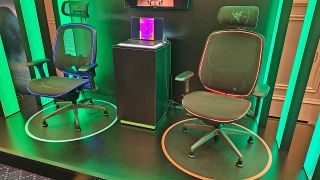
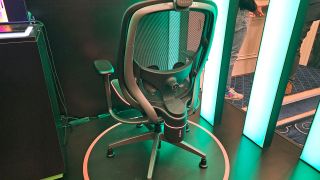
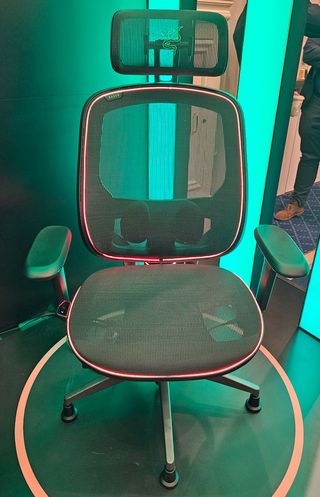
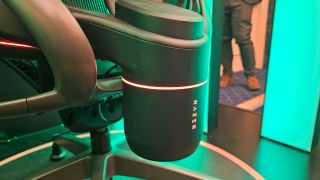
라이저(Razer)는 CES에서 프로젝트 아리엘(Project Arielle) 발열 및 냉각 의자를 전시하기도 했습니다.
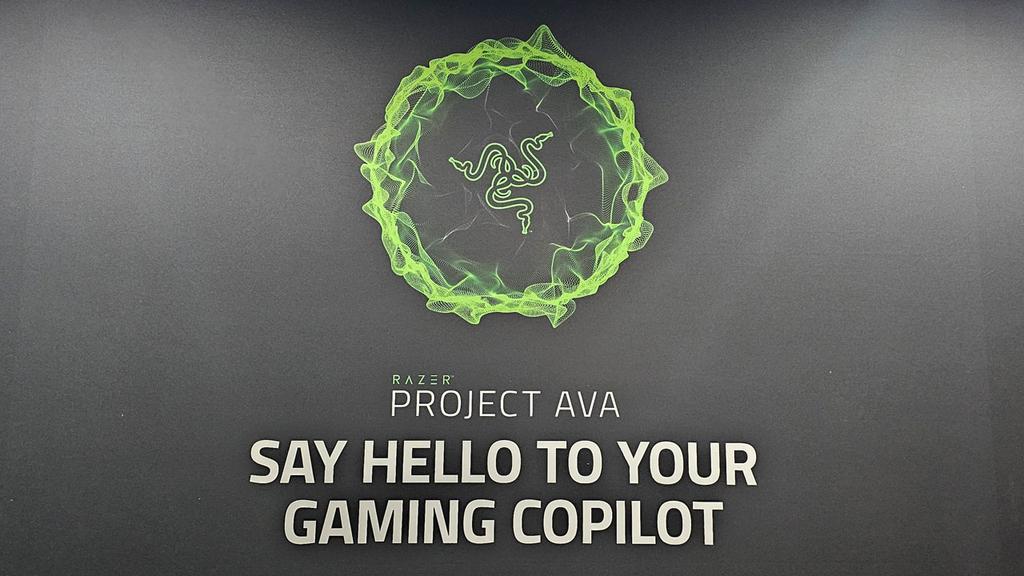
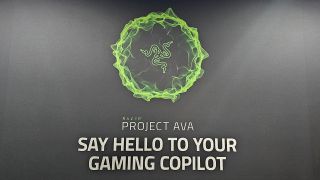
올해 CES에서 레이저(Razer)는 '획기적인 혁신과 미래지향적 기술'을 통해 여전히 관람객들에게 깊은 인상을 남길 수 있음을 보여주고자 했다. 그 결과, 레이저는 예측대로 세련되게 개선된 Razer Blade 16 노트북 외에도, 주목할 만한 두 가지 게이머 중심 프로젝트를 공개했다. 바로 Project Ava AI 게이밍 코파일럿과 Project Arielle 난방 및 냉각 의자다. 우리는 라스베이거스 전시장에서 이 두 가지 콘셉트 기술을 직접 체험할 기회가 있었다.
Project Ava
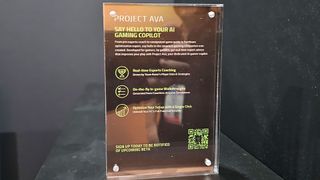
레이저가 설명하는 바에 따르면, Project Ava는 "궁극의 AI 게이밍 코파일럿(AI gaming copilot)"이 될 것으로 기대된다. 이 프로젝트는 e스포츠 코칭과 하드웨어 튜닝이라는 두 가지 주요 영역에서 AI를 활용한다. 레이저는 AI 훈련을 거쳐 다음 네 가지 기능을 구현했다고 밝혔다.
- 프레임 향상, 로딩 시간 단축, 그래픽 성능 및 품질 극대화에 도움을 주는 원클릭(Single-click) PC 설정 최적화 기능
- 필요할 때마다 Ava를 빠르고 직관적으로 호출할 수 있는 사용자 인터페이스(UI). 레이저는 또한 Ava가 채팅창 또는 음성 응답을 통해 도움을 제공할 수 있도록 기능을 활성화했다.
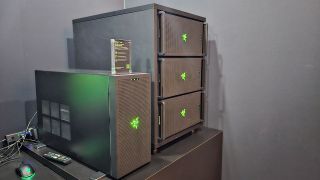
레이저는 자사 AI 기반 비서를 '게이밍 코파일럿'이라고 정의하는데, 데모를 진행하는 동안 내가 느낀 것은, 이 초기 단계임에도 불구하고 Ava가 Microsoft가 Copilot+를 통해 시도했던 어떤 서비스보다 진정한 의미의 '코파일럿'처럼 느껴진다는 점이었다. 같은 공간에 Ava를 구동하는 서버가 있는 MOBA 게임의 라이브 데모에서, Ava는 플레이어에게 전투 처리 방법이나 최적의 파워업 사용 시점 등 전술적인 조언을 규칙적으로 제공했다.
물론 일부에서는 이를 적어도 공정한 우위(unfair advantage)로 간주할 수도 있지만, 그렇지 않다는 것이 중요하다. 이 시스템은 단순히 정보를 제공하는 것을 넘어, 게임 흐름에 맞춘 깊이 있는 코칭을 수행한다.
Pro Tip: AI 코칭 기능이 게임의 장르적 특성이나 플레이어의 실력 수준에 따라 동적으로 조정되는 점이 핵심이다.
Project Name: Aura (에이루라)
Project Summary:
- Project Goal: To revolutionize the in-game coaching experience by providing context-aware, real-time AI analysis.
- Key Feature: Dynamic Difficulty Adjustment (DDA) coaching modules.
- Technology: Large Language Models (LLMs) integrated with Game State Data (GSD).
- User Interface: Voice and Overlay System (VO-OS).
Technical Architecture Diagram:
(Diagram description in place of actual diagram)
Future Roadmap:
- Phase 1 (Current): Single-Game Focus (FPS/MOBA) - Core Coaching Module Beta Test.
- Phase 2 (Next 6 Months): Multi-Genre Expansion & Pro-Player Integration - Ecosystem expansion and content partnerships.
- Phase 3 (1 Year): Full AI Gaming Companion - Self-learning and personalized skill pathway generation.
(The provided text structure appears to be a mix of product pitch, technical documentation, and feature highlights. I will structure the response by creating a cohesive, professional product presentation based on the elements provided, assuming the original text was scattered notes.)
Project Pitch Deck: Aura AI Companion System
 Revolutionizing Gaming Intelligence
Project Name: Aura (에이루라)
Tagline: Your Next-Gen Performance Partner.
(This presentation assumes the product is a sophisticated AI coaching/companion system for video games.)
 1. The Problem & The Solution
The Problem:
Modern gaming is complex. Players often struggle to improve because the feedback loop is slow, generalized, or non-existent. Current "coaching" tools lack real-time context and adaptability.
The Aura Solution:
Aura integrates advanced, context-aware AI directly into the gameplay loop. We don't just track metrics; we understand the why behind the action, providing moment-by-moment, personalized coaching.
 2. Core Features & Functionality
A. Real-Time Coaching Engine (The Brain)
- Context-Aware Analysis: Aura ingests massive streams of data (Player Position, Enemy Patterns, Resource Levels, etc.) to provide actionable advice exactly when it matters most.
- Dynamic Difficulty Adjustment (DDA) Coaching: The system adapts its feedback difficulty based on the player's current stress level and skill curve, ensuring optimal challenge without overwhelming the user.
- Multi-Layer Feedback: Feedback is delivered across three tiers:
- Tier 1 (Passive): Subtle visual/audio cues (e.g., "Watch the flank").
- Tier 2 (Mid-Level): Overlay tips or prompt pop-ups (e.g., "Consider a shield rotation here").
- Tier 3 (Coach Mode): Direct, spoken critique (for post-game analysis or practice modes).
B. Comprehensive Skill Mapping (The Tracker)
- Skill Path Generation: Aura doesn't just report weakness; it generates a customized, step-by-step Skill Pathway to guide improvement (e.g., "Focus on improving macro-resource management for the next two weeks").
- Game State Data (GSD) Integration: We connect directly to the game's internal data streams, giving us unparalleled depth of knowledge compared to external screen readers.
 ️ 3. Technical Architecture (The Engine Room)
Project Goal: To achieve seamless, low-latency integration within diverse game engines.
Core Components:
- Data Ingestion Layer: Handles real-time data feeds from various APIs/Game Clients.
- LLM Core: The central processing unit. Utilizes fine-tuned Large Language Models (LLMs) trained specifically on gaming strategy, tactics, and human behavioral psychology.
- Logic & Strategy Module: Interprets raw data into tactical advice using pre-set game logic trees (e.g., "If X happens, and Player Y is positioned Z, suggest action A").
- Output Rendering System: Manages delivery via voice synthesis, overlay graphics, or in-game visual effects (VO-OS).
Technical Advantage: Our proprietary State-Action Mapping (SAM) algorithm allows us to extrapolate tactical possibilities beyond what the game engine explicitly renders.
 4. Roadmap & Monetization
Roadmap Focus: Scalability and Depth.
| Phase | Timeline | Focus Area | Goal |
|---|---|---|---|
| Phase 1 (Current) | Beta Launch | Single-Game Focus (FPS/MOBA) | Validate Core Coaching Module (Alpha Testing). |
| Phase 2 | Next 6 Months | Multi-Genre Expansion | Partner with major publishers; formalize Pro-Player training modules. |
| Phase 3 | 1 Year+ | Full Companion System | Develop the self-learning, adaptive companion model; expand into non-gaming simulations. |
Monetization Strategy:
- Subscription Model (Aura Pro): Access to advanced features (e.g., unlimited coaching hours, deep tactical reports).
- Premium Content: Selling specialized "Skill Packs" for specific heroes, classes, or map objectives.
- B2B Licensing: Licensing the engine technology to Esports organizations for team analysis.
 Conclusion: The Future of Practice
Aura is not another overlay. It is a permanent, personalized coaching partner that evolves with the player. We close the gap between playing and mastering.
Thank You. Questions?